CRPI
Economic conditions around you
Look at jobs, prices and interest rates alongside their sources and dates.
Sad Korea by Park Hongki
At 11 p.m., on the way home, a message arrives asking for a revision by morning. When does the day end for the person who gets it?
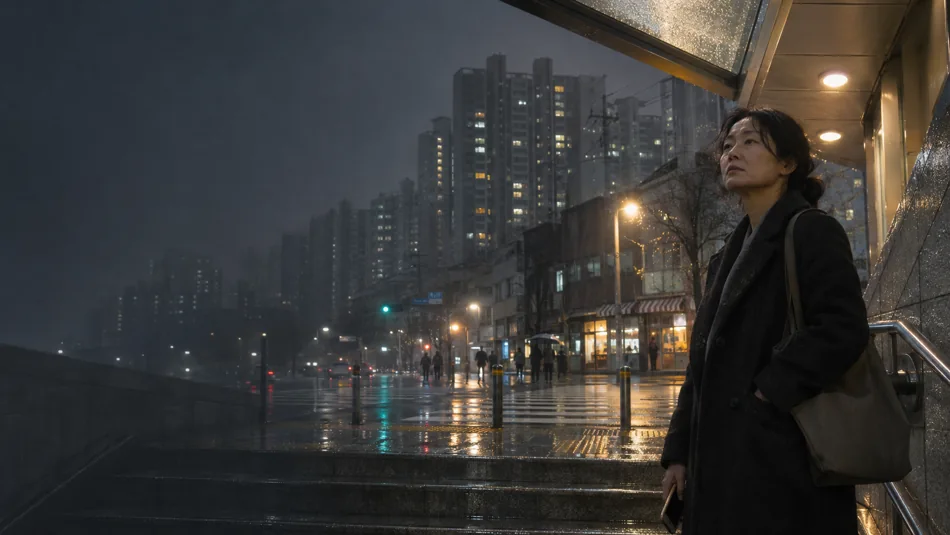
Your life is not a commodity. Your records belong to you.
Journal entries and questionnaire answers stay in the app on your phone. We don’t automatically send them to our servers or an external AI service, use them for advertising, or sell them. How records are kept
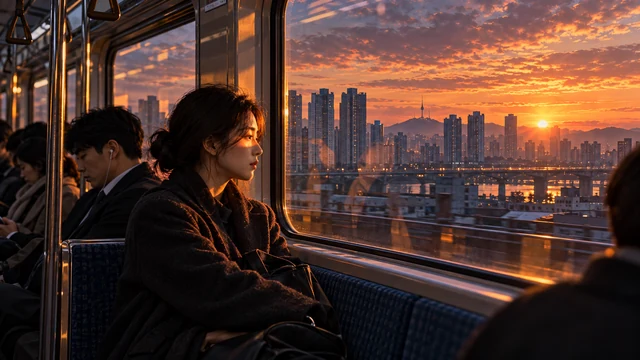
A scene from Sad Korea
아침은 출근길에 먹히고, 낮은 업무에 먹히고, 밤은 업무 메시지 알림과 내일을 걱정하는 마음에 남김없이 먹힌다.
The commute devours the morning, work devours the day, and message alerts and worries about tomorrow devour what is left of the night.
Sad Korea, prologue p. 9 · PDF p. 10
Yoonseo thinks about next month’s living expenses and opens the file on the train. Her rent, her next repayment, and her next contract are all part of the decision.
Read more from the prologue → Browse all 150 scenes →Why keep a record?
When work follows you home or care falls on you again, a line about what happened gives you something to return to. Two entries can show when a request kept coming or when care and bills fell on the same day.
Sad Korea, prologue pp. 5–22
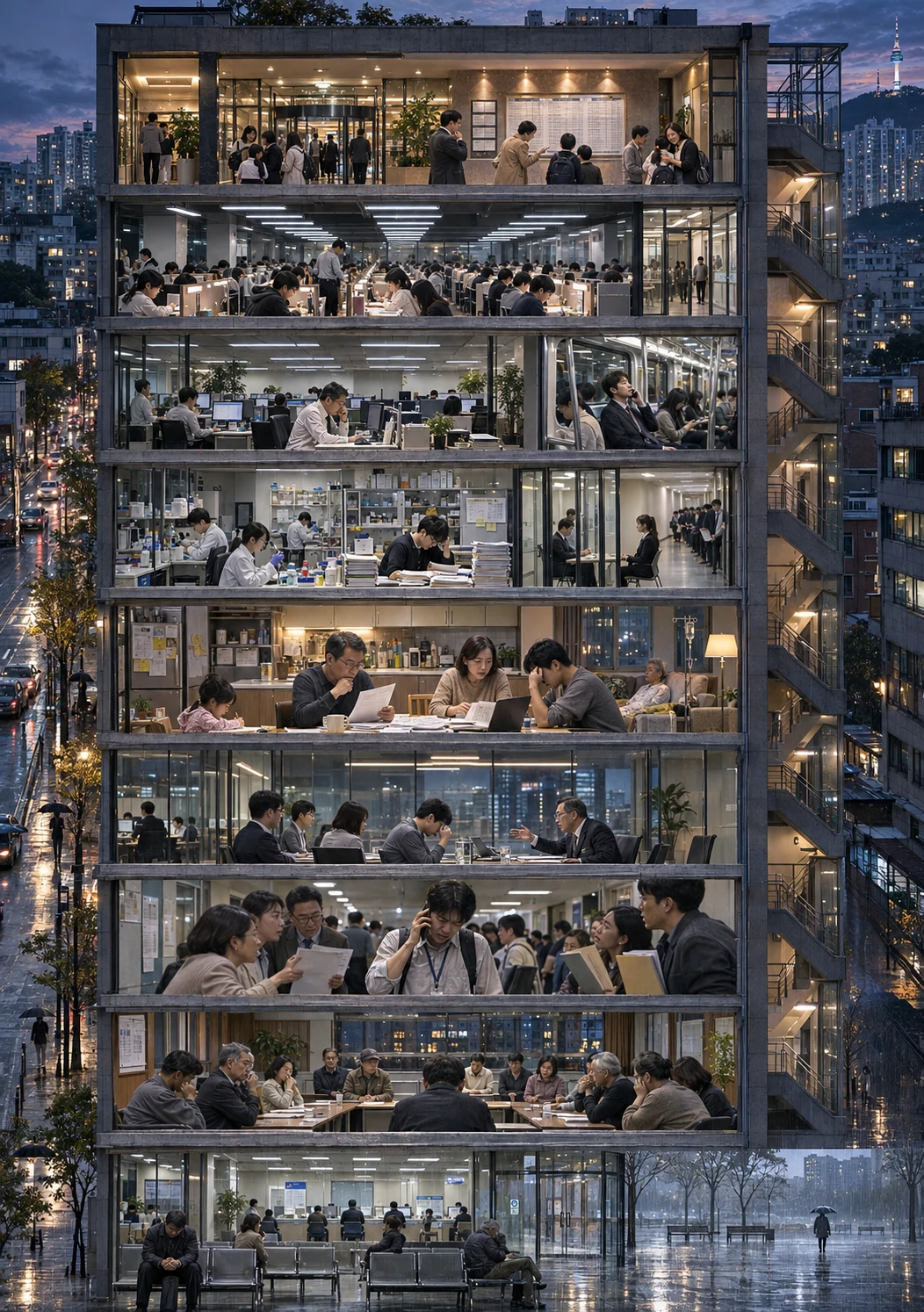
Open a floor to follow Yoonseo through an ordinary day. See what narrowed her choices, read the passage with its page number, and try a related scene from the app.
Prologue pp. 23–24
Yoonseo records when the message arrived and what she did. The book turns to setting boundaries and keeping a record of what happened.
Open the journal guide →By Park Hongki
The prologue begins with one person’s day. Six chapters trace how the state and the market enter that day. The epilogue listens to the people who have lived through it.
Dante's descent is used to follow ordinary lives through ranking, education, work, credentials, debt, power at work, repeated demands, collective silence and late institutions. The prologue ends with the small acts of drawing a boundary and recording what happened.
Dante's descent · Nine hells · A practice of self-defense
“여기 들어오는 자, 오직 스스로 탓하는 법을 배워라.”All who enter here, learn only to blame yourselves.Korean manuscript p. 1 · PDF p. 2
Section pages 1–27. The nine hells are on pp. 5–22; self-defense is on pp. 23–24.
Two documents arrive on the same day. One eases rules for capital and assets; another makes people seeking help prove eligibility or face sanctions. The chapter links older hierarchies and the changes after the 1997 crisis to welfare, surveillance and credit.
Freedom above and scrutiny below · 1997 and older hierarchies · Credit, eligibility, stigma
“신용은 현대 사회의 보이지 않는 시민권이다.”Credit is the invisible citizenship of modern society.Korean manuscript p. 48 · PDF p. 49
Section pages 28–75. Pairs with the ninth hell and the state's power to screen people before help arrives.
Two young voters hold equal ballots yet face different choices in work, housing and credit. The chapter looks at education as an entrance ticket, the family resources that make another try possible, and the first job and home that shape a life.
Two voters · Parental assets · First jobs and first homes
“경쟁은 실력을 겨루지만, 서열은 인간의 값을 매긴다.”Competition tests ability; hierarchy puts a price on a person.Korean manuscript p. 81 · PDF p. 82
Section pages 76–113. Pairs with the first, second and fourth hells.
The chapter begins in a small room in Tokyo. Brazil's entrenched asset inequality and Japan's hiring freeze offer two mirrors for Korea's shrinking entry-level jobs, debt-backed housing and platforms that turn isolation into time on screen and revenue.
Brazil and inherited assets · Japan's long stagnation · Young Koreans and the market for loneliness
“불안은 우리가 애써 미뤄두었던 삶이 보내는 비정한 ‘청구서’다.”Anxiety is the ruthless bill sent by a life we have kept putting off.Korean manuscript p. 136 · PDF p. 137
Section pages 114–152. Returns to study time and debt through the eyes of young people kept outside the gates.
Legal transactions and procedures can add up to the loss of a person's time. Above them stand the beneficiaries the book calls Nephilim. Below are five responses: taking on every burden, passing pressure down, exploiting need, becoming gray, or turning into a monster.
Education, housing, labor, finance, media, politics · The Nephilim · Five faces shaped by the system
“부분을 보면 다 합법이고, 전체를 보면 지옥이다.”Each part looks lawful; taken together, it is hell.Korean manuscript p. 153 · PDF p. 154
Section pages 153–183. Connects the third, sixth, seventh and eighth hells. The five faces describe changing responses to conditions.
Growth reported in the news fails to reach household accounts and tables. Risks move from firms to subcontractors, housing finance to family debt, and gaps in welfare to family care. The chapter follows those costs into administrative screening, fewer entry points and monetized isolation.
Six bottlenecks to growth · Costs passed downward · Administration, politics and the market for loneliness
“성장은 위에서 돌고, 행정은 아래를 심사한다.”Growth circulates above; administration screens those below.Korean manuscript p. 184 · PDF p. 185
Section pages 184–208. Pairs with work, household debt and institutions in the third, fifth and ninth hells.
The book turns to people who have endured: workers aging between wages and asset prices, shop owners who keep opening and young people waiting for a chance. It asks what remains to be protected and what record can be left for the next person.
Age and witness · Suburban workers, small shop owners, young people · Boundaries and testimony
“아직 기록해야 할 억울함이 남아 있기 때문이다.”There is still an injustice that needs to be recorded.Korean manuscript p. 228 · PDF p. 229
Section pages 209–234. Follows the gray plain into the prologue's practice of self-defense and the epilogue's act of witnessing.
People who have lost someone or been pushed out of a job struggle to find a place to speak. After the event comes another pain: having to explain it and judge oneself. The book looks for recovery in someone willing to hear and remember what happened.
Loss and dismissal · The second pain of self-blame · The solidarity of witnesses
“나는 견뎠지만 아무도 내가 견딘 것을 몰랐습니다.”I endured, but nobody knew what I endured.Korean manuscript p. 235 · PDF p. 236
Section pages 235–242. This is the idea behind the app's journal: record what happened and return to it in your own words.
Using the Sad Korea app
Start with the art and music. You can write or answer questions whenever you feel ready.
Follow Yoonseo’s sample entry into the archive and the report. Write your own entries and answers in the app on your phone.
The answers are 30 minutes apart. They don’t establish why the time increased.
Question. How many minutes did you spend on duties such as volunteering or running a group today?
October 23: 45 minutes. October 25: 75 minutes.
Read a passage with the artwork. Play the music if you like.
Use the journal to write a line or choose a topic.
Review what you wrote, save it and open it by date in the archive.
Choose which entries or answers to use and review your consent. Open the available results and the source records.
The app saves your journal entries and questionnaire answers on your phone. About record storage →
Stay with a scene that feels familiar, or read with music on your commute.
Find the source of a line that stayed with you.
Write what happened and how it felt in your own words.
Look back at what kept happening and how you responded.
Reports based on your records
Choose a diary entry, questionnaire answers, or both. The report shows what it can support with the records and dates you selected.
Park Hongki designed three models for reading the conditions around you, your household and your day. The example shows a partial report tested on the web. Integration of the three models in the Android report is under review.
The difference is 30 minutes. These two records cannot establish why it changed.
Two survey answers, dated October 23 and 25, 2026, record actual time spent on commitments such as volunteering or running a group.
CRPI
Look at jobs, prices and interest rates alongside their sources and dates.
Bₜ / BTI
Use the income, essential expenses and payment dates you enter to see when your options may narrow.
SSM-C
Return to what you recorded about work, care, relationships and physical or emotional strain.
Gallery
Follow the app’s original scene IDs and five collections. Find the picture, passage and associated music in one place.
Entrance music
Play the five entrance tracks in order, or choose one to hear it on repeat.
Android
The public Android release is in preparation. You can explore the app screens and try the demo above. Korean and English are planned for the same Android app.